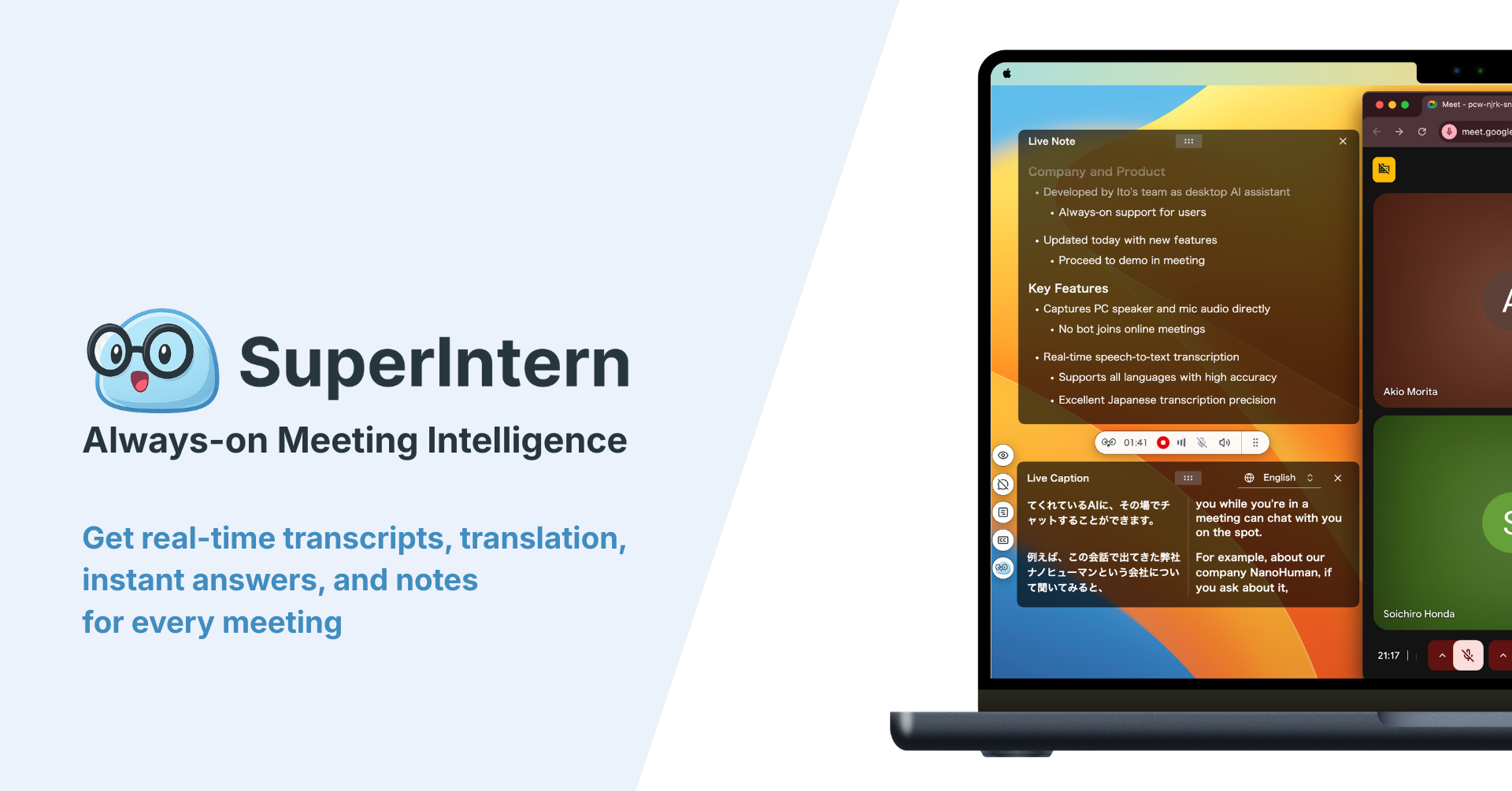
AI Interview Assistant: How to Prepare Smarter and Perform Better
Interviews are high-stakes moments — whether you are the one asking the questions or the one answering them. A single missed detail can change a hiring decision. A forgotten follow-up question can cost you the perfect candidate.
In 2026, AI interview assistants are changing how both sides of the table prepare, perform, and review. Recruiters use them to transcribe conversations, extract key answers, and compare candidates objectively. Candidates use them to practice responses, get real-time coaching, and refine their approach.
But not every tool works the same way. Some join your call as a bot — visible to everyone. Others capture audio silently in the background. The right AI interview helper depends on your role, your workflow, and how much you value a natural conversation.
This guide covers the best AI tools for interviews in 2026, how to use them effectively, and how to stay ethical while doing it.
⚠️ This article was independently compiled based on publicly available information and user feedback as of April 2026.
Table of Contents
- What Is an AI Interview Assistant?
- Use Cases: Both Sides of the Interview
- How AI Tools Help During Interviews
- Best AI Tools for Interviews in 2026
- Feature Comparison
- Tips for Using AI in Interviews Ethically
- FAQ
- Conclusion
1. What Is an AI Interview Assistant?
An AI interview assistant is software that uses artificial intelligence to support one or more stages of the interview process — preparation, the live conversation, and post-interview review.
For interviewers and recruiters, these tools typically:
- Transcribe the interview in real time so you can focus on the candidate instead of taking notes
- Generate structured summaries with key answers, skills mentioned, and red flags
- Enable objective comparison across candidates by producing consistent, searchable records
For candidates, AI interview tools often:
- Simulate mock interviews with AI-generated questions tailored to the role
- Provide feedback on answer structure, clarity, filler words, and pacing
- Record practice sessions so you can review and improve before the real thing
The common thread: AI handles the cognitive overhead — note-taking, recall, analysis — so humans can focus on what matters: the conversation itself.
2. Use Cases: Both Sides of the Interview
For Interviewers and Recruiters
Hiring managers juggle multiple candidates across multiple rounds. Without a system, it is easy to forget what Candidate A said versus Candidate B, or to let unconscious bias creep into evaluations.
An AI interview helper solves this by creating a complete, objective record of every conversation:
- Transcribe every interview automatically. No more scribbling notes while trying to maintain eye contact. The AI captures everything, word for word.
- Extract key answers and themes. After the interview, AI highlights the candidate's responses to critical questions — technical skills, culture fit, salary expectations — so you can compare candidates side by side.
- Reduce bias in hiring. When every interviewer on the panel has access to the same transcript, decisions are based on what was actually said, not on who took better notes.
- Speed up the debrief. Instead of spending 30 minutes summarizing each interview for the hiring committee, share the AI-generated summary and jump straight into discussion.
For Candidates
Job seekers face a different challenge: they get one shot. Preparation is everything, but traditional prep — reading about the company, rehearsing answers in the mirror — only goes so far.
AI tools give candidates an edge:
- Practice with realistic AI mock interviews. AI can generate role-specific questions (behavioral, technical, case-based) and provide instant feedback on your answers.
- Get coaching on delivery. Some tools analyze pace, filler words ("um," "like"), and answer length to help you sound more confident and concise.
- Review recordings of practice sessions. Watch yourself back. Identify nervous habits, weak answers, and areas where you ramble.
- Prepare for specific companies. AI tools can research the company and generate likely interview questions based on the role, industry, and company culture.
3. How AI Tools Help During Interviews
Real-Time Transcription
The most immediate benefit of an AI interview assistant during a live interview is transcription. Instead of splitting attention between listening and writing, you get a complete transcript automatically.
For recruiters, this means better engagement with the candidate. For candidates using AI-enabled practice tools, it means a searchable record of every mock session.
The best tools also provide speaker diarization — labeling who said what — which is essential when reviewing multi-person panel interviews.
Post-Interview Summary and Analysis
After the conversation ends, AI generates structured output:
- Meeting summary with key discussion points
- Candidate highlights — strengths, concerns, and notable answers
- Action items — follow-up questions for the next round, reference check topics, or offer details to prepare
- Searchable transcript — find exactly when a candidate discussed a specific technology or experience
Translation for Cross-Language Interviews
Global companies increasingly interview candidates who speak different languages. AI tools with real-time translation make it possible to conduct interviews across language barriers without a human interpreter.
This is particularly valuable for:
- Multinational hiring teams interviewing candidates in local languages
- Remote-first companies with distributed interview panels
- Roles requiring multilingual communication where you want to assess both languages
4. Best AI Tools for Interviews in 2026
1. SuperIntern — Best for Natural Interview Transcription Without a Bot

SuperIntern is a real-time meeting transcription tool that captures interviews without adding a bot to the call. For recruiters and hiring managers who want an accurate record without disrupting the interview dynamic, this is the key differentiator.
Why it works for interviews:
- Botless design — No recording bot joins the call. The candidate sees only the interviewer, creating a more natural and comfortable conversation. This matters: candidates behave differently when they know a bot is recording.
- Real-time transcription with speaker diarization — See who said what as the interview happens. Review the transcript during a panel debrief without waiting for post-processing.
- AI-generated interview notes — Summary, key points, and action items are ready within seconds of ending the call. Share them with the hiring committee immediately.
- 50+ language support with real-time translation — Interview candidates in their native language while reading a live translation. Ideal for global hiring.
- Post-interview AI chat — Ask questions about the interview ("What did the candidate say about their leadership experience?"), draft a follow-up email, or extract specific answers.
Limitations: Desktop app only (Mac and Windows). Designed for live meetings — cannot upload pre-recorded interview files.
Pricing: Free plan available (no credit card required). Plus plan at $20/month for 100 hours.
2. Otter.ai — Best for English Interview Transcription
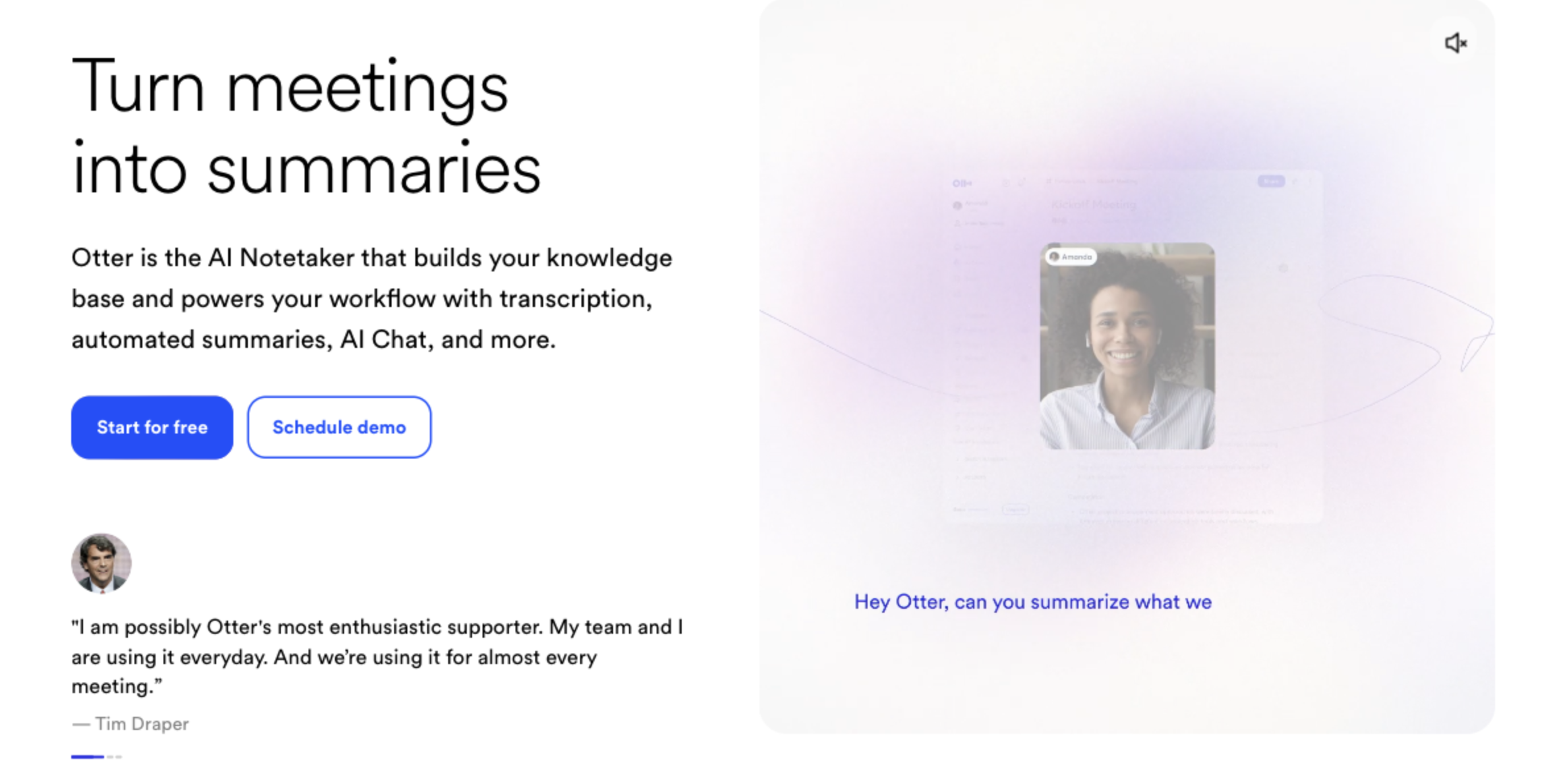
Otter.ai is a well-known AI interview assistant for English-language conversations. It provides accurate transcription with speaker identification and integrates with major meeting platforms.
Key strengths:
- High-accuracy English transcription with automatic speaker labels
- Browser-based — upload recorded interviews or transcribe live via bot
- Keyword detection helps you search across multiple interview transcripts
- Integrates with Zoom, Google Meet, and Microsoft Teams
Limitations: Limited non-English support. The bot that joins meetings is visible to candidates, which can affect their comfort level. Free plan caps at 300 minutes per month.
Pricing: Free plan (300 min/month). Pro at $16.99/month.
3. Metaview — Purpose-Built for Recruiting Interviews
Metaview is designed specifically for the recruiting workflow. It integrates with applicant tracking systems (ATS) and generates interview-specific summaries rather than generic meeting notes.
Key strengths:
- Built for recruiting — summaries focus on candidate evaluation, not general meeting notes
- ATS integrations (Greenhouse, Lever, Ashby) sync notes directly to candidate profiles
- Structured scorecards help interviewers evaluate consistently
- Supports multiple interview formats: phone screens, technical rounds, panels
Limitations: Requires a bot to join and record the call. Pricing is higher than general-purpose tools. Primarily English-focused.
Pricing: Custom pricing (contact sales). Free trial available.
4. Notta — Best for Multilingual Interview Transcription
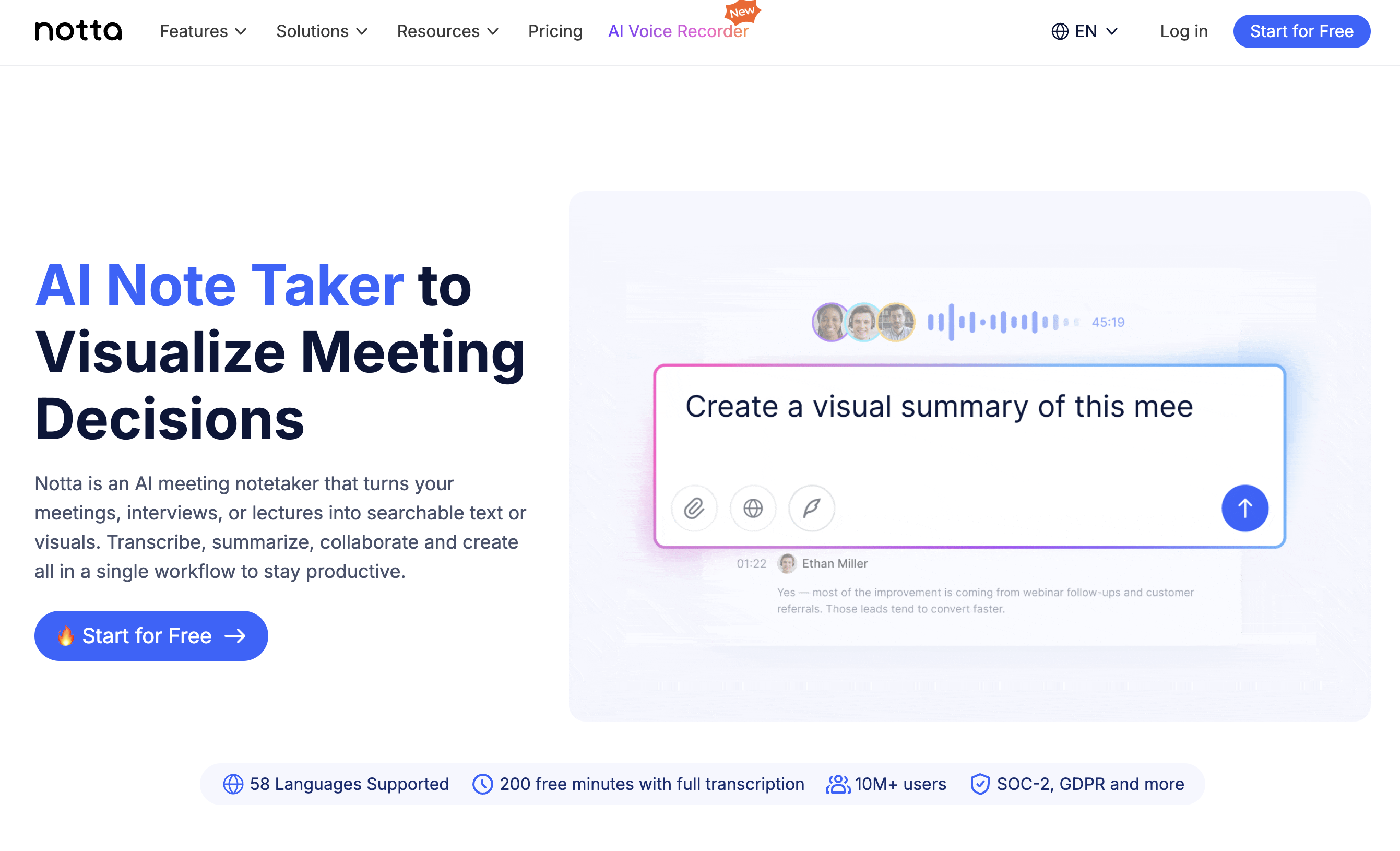
Notta supports 104 languages, making it a strong choice for organizations that interview candidates across different languages and regions.
Key strengths:
- 104-language support with solid accuracy
- Upload recorded interviews or transcribe live
- AI summary and action item extraction
- Available on web, desktop, and mobile
Limitations: Bot joins meetings for live transcription. Free plan limited to 120 minutes per month. Advanced analytics require paid plans.
Pricing: Free plan (120 min/month). Pro at $14.99/month.
5. BrightHire — Structured Interview Platform
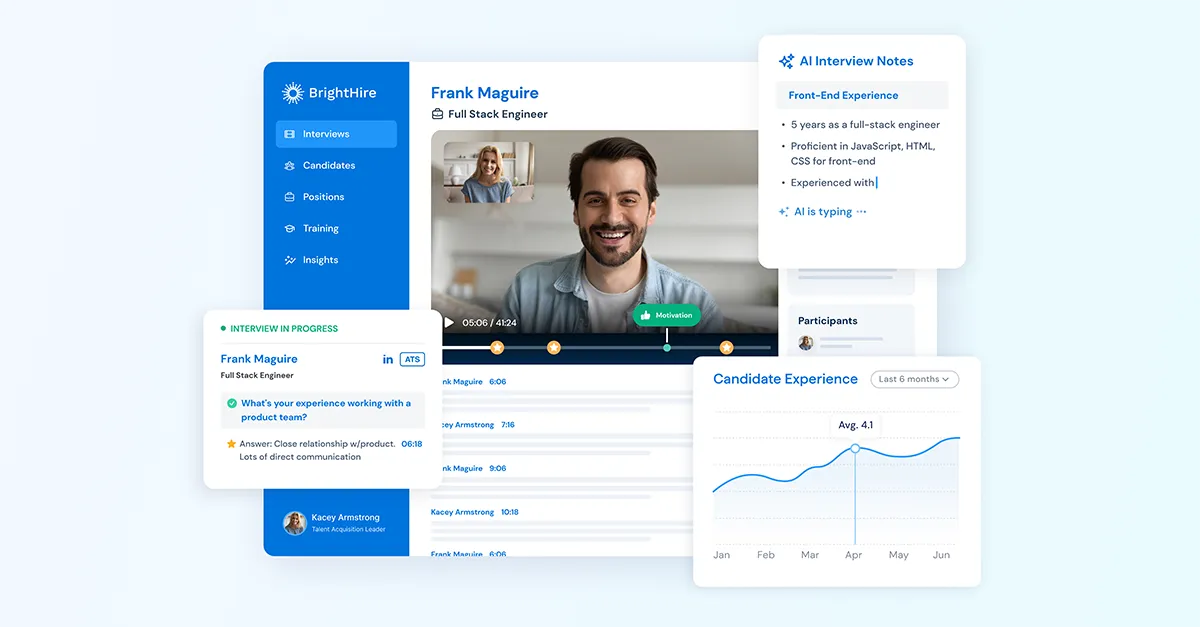
BrightHire combines interview recording with structured interview guides. It is designed for hiring teams that want to standardize their interview process and reduce bias.
Key strengths:
- Interview guides with pre-built question sets keep interviewers on track
- Automatic recording and transcription with highlights
- Candidate comparison features for debrief sessions
- Integrates with major ATS platforms
Limitations: Requires a bot to join calls. Enterprise-focused pricing. Less suitable for individual recruiters or small teams.
Pricing: Custom pricing (contact sales).
5. Feature Comparison
| Feature | SuperIntern | Otter.ai | Metaview | Notta | BrightHire |
|---|---|---|---|---|---|
| Real-time transcription | ✅ | ✅ (bot) | ✅ (bot) | ✅ (bot) | ✅ (bot) |
| Botless recording | ✅ | ❌ | ❌ | ❌ | ❌ |
| Speaker diarization | ✅ | ✅ | ✅ | ✅ | ✅ |
| AI interview summary | ✅ | ✅ | ✅ (recruiting-focused) | ✅ | ✅ |
| ATS integration | ❌ | ❌ | ✅ | ❌ | ✅ |
| Real-time translation | ✅ (50+) | ❌ | ❌ | Limited | ❌ |
| Structured interview guides | ❌ | ❌ | ✅ | ❌ | ✅ |
| Free tier | ✅ | ✅ (300 min) | Trial only | ✅ (120 min) | ❌ |
| Languages | 50+ | English-focused | English-focused | 104 | English-focused |
6. Tips for Using AI in Interviews Ethically
AI interview tools are powerful, but they come with responsibilities. Here is how to use them the right way:
1. Always Disclose Recording
If you are recording an interview — whether through a bot or a botless tool — tell the candidate. In many jurisdictions, recording without consent is illegal. Even where it is legal, failing to disclose erodes trust.
A simple statement works: "I will be using a transcription tool to capture our conversation so I can focus on you instead of taking notes. Is that okay with you?"
2. Use AI for Support, Not Decisions
AI should augment your judgment, not replace it. Use transcripts and summaries to inform your evaluation, but make hiring decisions based on human assessment. AI can miss nuance, context, and non-verbal communication.
3. Protect Candidate Data
Interview transcripts contain sensitive personal information. Ensure your tools comply with data protection regulations (GDPR, CCPA, etc.) and that transcripts are stored securely with appropriate access controls.
4. Standardize the Process
If you use AI tools for some candidates, use them for all candidates in the same role. Inconsistent use can introduce bias — candidates who were recorded and analyzed may be evaluated differently from those who were not.
5. Review AI Summaries for Accuracy
AI-generated summaries are helpful but not infallible. Always review them for accuracy before sharing with the hiring committee. Misattributed quotes or misunderstood technical terms can unfairly affect a candidate's evaluation.
7. FAQ
What is an AI interview assistant?
An AI interview assistant is a tool that uses artificial intelligence to help with interview preparation, real-time transcription, and post-interview analysis. It serves both interviewers (recruiters, hiring managers) and candidates (job seekers preparing for interviews).
Can candidates use AI interview tools?
Yes. Many AI tools help candidates practice with mock interviews, get feedback on their answers, and review their performance. However, using AI to generate answers in real time during a live interview without disclosure is generally considered unethical.
Is it legal to record interviews with AI?
Laws vary by jurisdiction. In many places, you need consent from all parties before recording. Always disclose that you are using a transcription tool and get the candidate's agreement before proceeding.
What is the best AI tool for interview transcription?
For recruiters who want natural conversations without a bot disrupting the dynamic, SuperIntern offers botless real-time transcription. For ATS-integrated recruiting workflows, Metaview and BrightHire are purpose-built alternatives.
Can AI help reduce bias in hiring?
Yes. By creating consistent, searchable records of every interview, AI tools help ensure that evaluations are based on what candidates actually said rather than on interviewer recall or note-taking ability. However, AI itself can contain biases, so human oversight remains essential.
Do AI interview tools work for non-English interviews?
SuperIntern supports 50+ languages with real-time translation, and Notta supports 104 languages. Most other tools are primarily English-focused, so check language support before committing to a tool for multilingual hiring.
8. Conclusion
AI interview assistants have moved from novelty to necessity for serious hiring teams. They eliminate the trade-off between engaging with the candidate and capturing accurate notes. They create objective records that reduce bias and speed up decision-making. And they give candidates better tools to prepare and perform.
For recruiters and hiring managers who value natural conversation, SuperIntern stands out with its botless approach: full transcription, AI-generated summaries, and multilingual support — all without a recording bot joining your call and changing the interview dynamic. Try it free today.