
International Meetings Without an Interpreter: How AI Is Changing Business
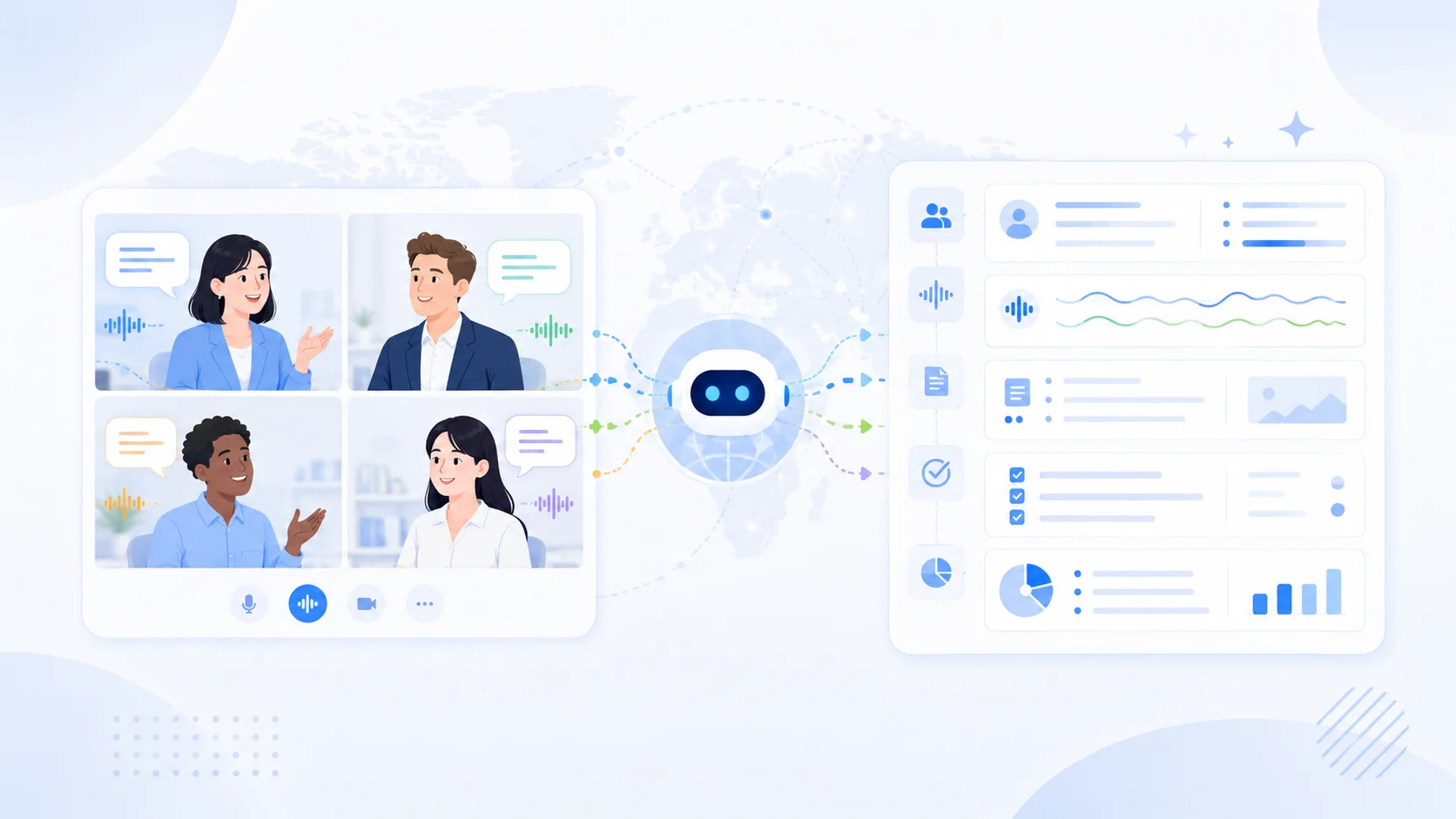
Your company just closed a contract with a manufacturer in Shanghai. The operations team in Bogota needs to coordinate weekly deliveries. The traditional solution: hire a professional Chinese-Spanish interpreter at $50 to $150 USD per hour, with limited availability and the need to schedule every meeting days in advance.
That reality is changing fast. AI-powered simultaneous translation has reached a level of accuracy that lets teams hold productive meetings across multiple languages, without human interpreters, without complex scheduling, and at a fraction of the cost.
But this does not mean professional interpreters have become irrelevant. What has changed is the threshold: the vast majority of everyday business meetings no longer need them. This article explores when AI is enough, when you still need a human interpreter, and how to make the transition intelligently.
⚠️ This article is an independent analysis by NanoHuman Inc., based on publicly available information as of March 2026. SuperIntern is our own product, but we describe its capabilities and limitations as objectively as possible.
The Real Cost of Professional Interpretation
To understand the impact of AI, you first have to put a number on what companies currently spend on interpretation.
Professional simultaneous interpreter: Between $50 and $150 USD per hour, depending on the language pair and specialization. For less common combinations (like Korean-Spanish or Japanese-Portuguese), prices can exceed $200 per hour. Most agencies require a 2-hour minimum per booking.
Consecutive interpreter: More affordable ($30 to $80 per hour), but doubles the duration of every meeting because each statement has to be repeated in the other language.
Remote interpretation services (OPI/VRI): Platforms like LanguageLine or KUDO offer on-demand interpreters from $2 to $5 per minute, which works out to $120 to $300 per hour.
For a mid-sized company with 10 international meetings per week of 30 minutes each, the monthly bill for interpretation can exceed $10,000 USD. And that does not count the time lost on coordination, bookings, and rescheduling when an interpreter is not available.
What AI Can Do Today (and What It Cannot)
AI-powered simultaneous translation has improved dramatically, but it is important to have realistic expectations.
What AI Does Well
Operational and follow-up meetings. Daily standups, progress reviews, project updates: these meetings follow predictable patterns and use repetitive vocabulary. AI handles these scenarios with high accuracy.
Presentations and demos. When one person speaks in a structured way (product presentation, training, webinar), AI translates more accurately than in chaotic conversations with multiple speakers.
Early-stage sales meetings. First commercial conversations tend to be more formal and structured. AI translation is enough to build initial trust and explore opportunities.
Internal communication between global teams. When everyone works for the same company and shares context, minor misunderstandings get corrected quickly. AI is ideal for this kind of ongoing communication.
Where AI Still Has Limits
High-value contract negotiations. When every word has legal or financial implications, a translation error can cost millions. Human interpreters are still needed here.
Regulated medical or legal contexts. Sectors where terminological precision has direct consequences for people's lives or freedom require certified interpretation.
Highly emotional or mediation meetings. AI does not pick up on cultural nuances, implicit tones of voice, or the diplomacy needed in delicate situations like terminations, mediations, or serious conflict resolution.
Languages with very little training data. Indigenous languages or regional dialects underrepresented in AI training data can present significant accuracy problems.
Options Available for Meetings Without an Interpreter
Native Features of Meeting Platforms
Zoom offers translated subtitles as part of its AI package (requires a paid plan). Microsoft Teams includes translation features through Copilot. Google Meet has translated captions in several languages.
Advantage: No additional installation required. Limitation: Only works inside the platform itself. Quality in Spanish and other non-English languages varies. They do not offer integrated summaries or meeting notes.
Dedicated Translation Tools
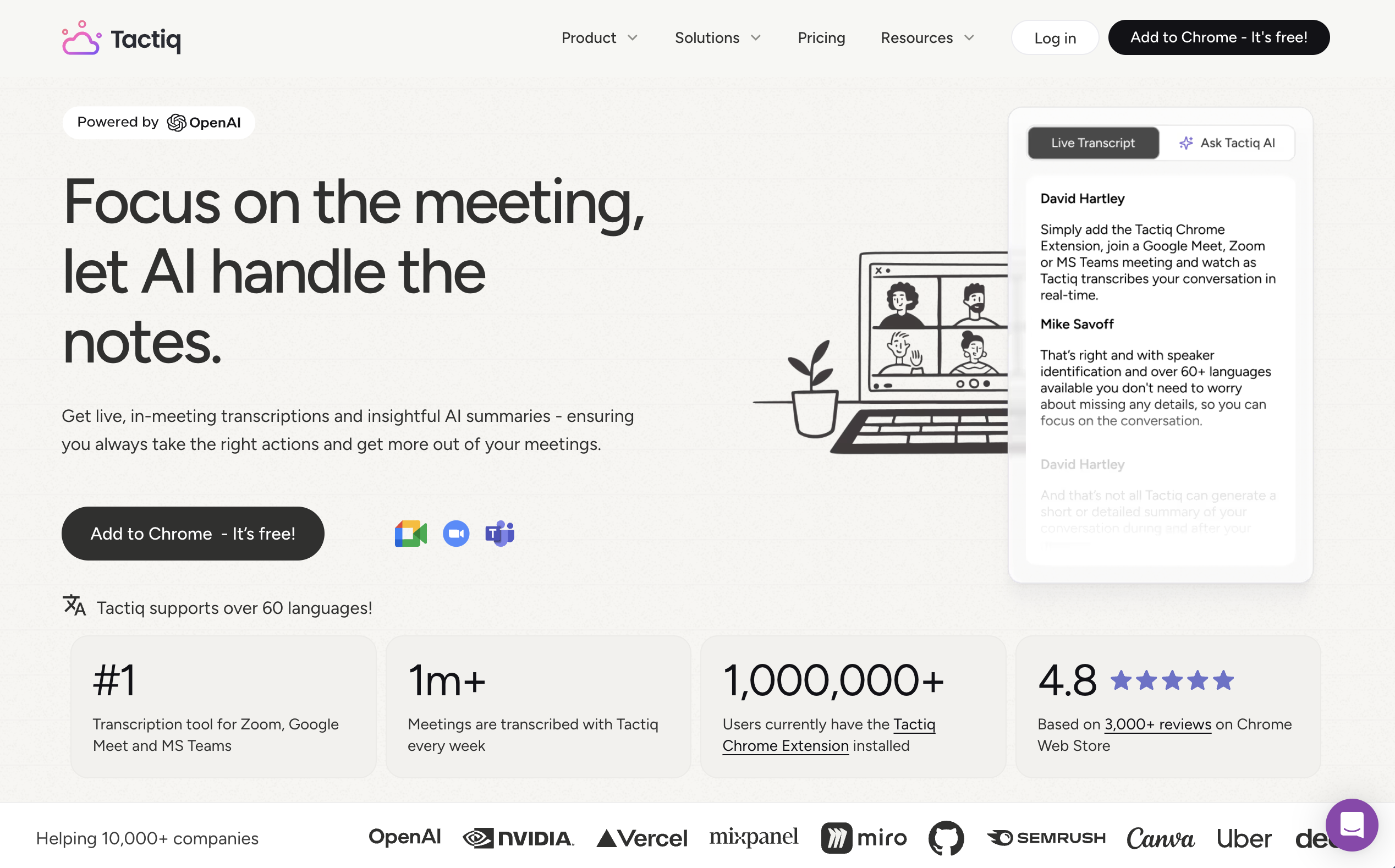
Tactiq works as a Chrome extension for transcription and translation, but lacks proper real-time translation; it focuses on transcription with post-meeting summaries. Its browser-only operation limits flexibility.
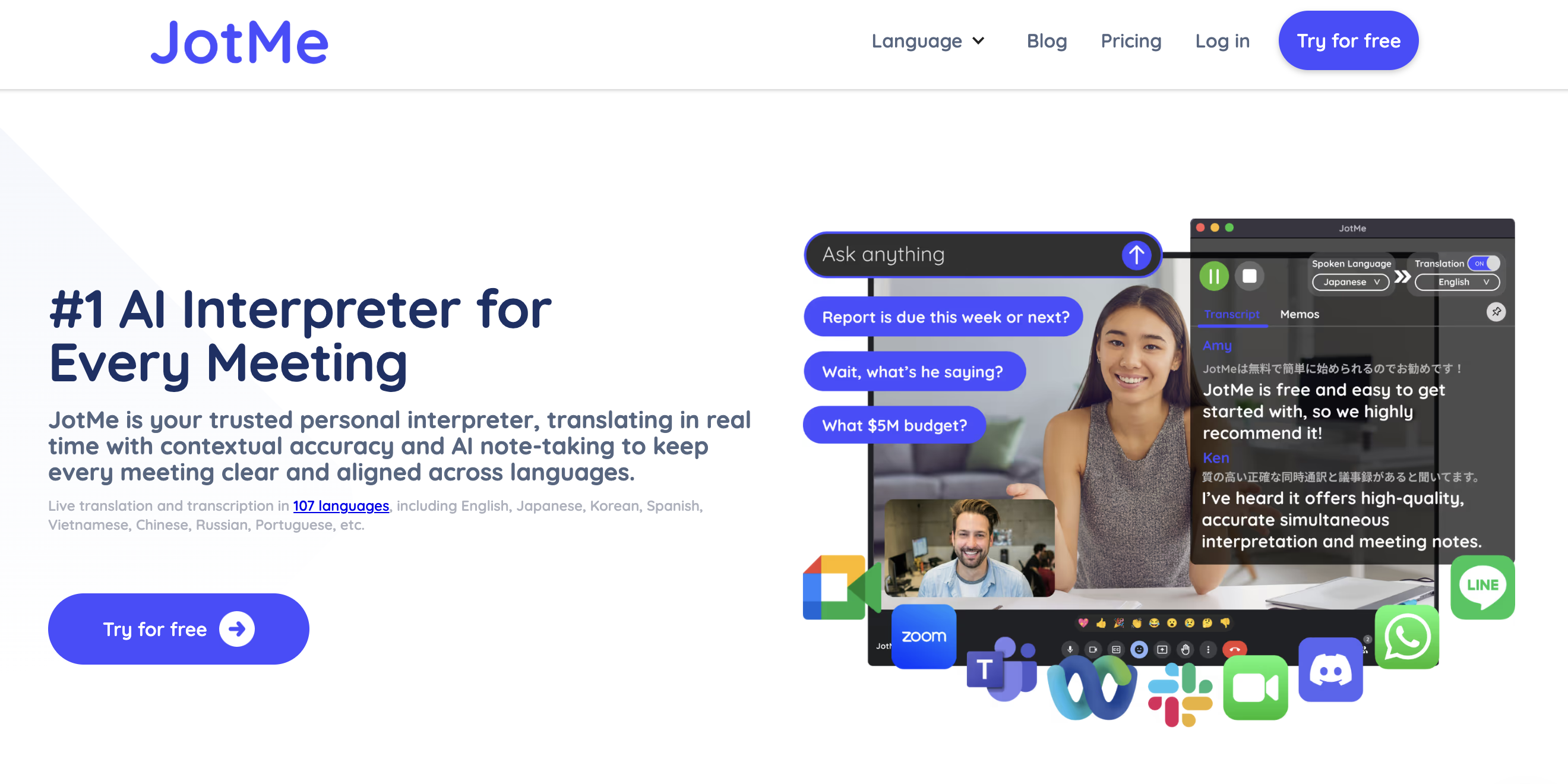
JotMe offers real-time translation via a desktop app, supporting 107 languages. However, translation minutes are limited even on paid plans, and the quality of its automatic notes has received mixed reviews.
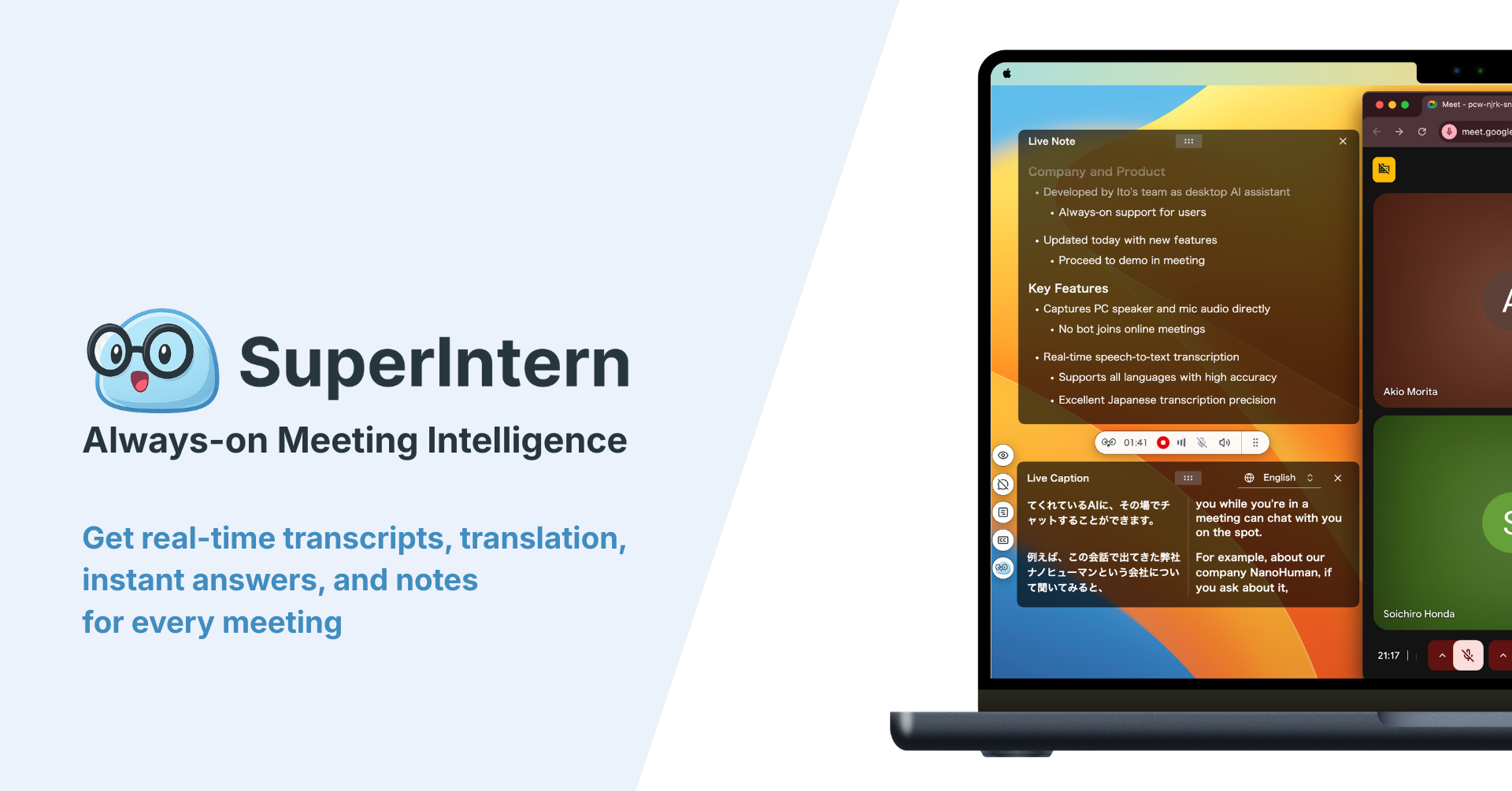
SuperIntern combines real-time translation with Live Notes: structured summaries that update during the meeting. Its botless architecture means no extra participant appears on the call. It works with any meeting platform by capturing audio directly from the system.
Cost Comparison: AI vs. Human Interpreter
| Scenario | Human interpreter | SuperIntern (Plus) | Estimated savings |
|---|---|---|---|
| 10 meetings/week × 30 min | ~$5,000-10,000/month | $20/month | 99%+ |
| 5 meetings/week × 1 hour | ~$5,000-15,000/month | $20/month | 99%+ |
| 2 meetings/month (strategic) | ~$400-600/month | $20/month | 95%+ |
The cost difference is dramatic. Even accounting for the fact that some strategic meetings will still need a human interpreter, most companies can cut their interpretation spending by 80 to 95 percent.
How to Make the Transition: A Practical Plan
Step 1: Classify Your Meetings
Not all meetings are equal. Create three categories:
Category A, AI only: Internal meetings, standups, project follow-ups, product demos. These can migrate to AI translation right away.
Category B, AI plus human review: Advanced sales meetings, executive presentations, coordination with strategic partners. Use AI for live translation and summaries, but have someone bilingual on the team who can step in if there is confusion.
Category C, human interpreter required: Contract negotiations, legal proceedings, regulated medical contexts. Keep professional interpretation for these cases.
Step 2: Pilot With the Most Receptive Team
Start with a team that already has frequent international meetings and is open to new tools. Ideally, Category A meetings with low pressure.
Step 3: Measure Concrete Results
After 2 to 4 weeks, evaluate three metrics: time saved on interpreter coordination, total cost compared to the previous month, and team satisfaction with translation quality.
Step 4: Scale Gradually
With real data, expand to more teams and eventually to Category B meetings. Category C meetings stay with professional interpreters, and that is fine.
The Future: AI and Interpreters as Complements
The most realistic vision is not "AI replaces interpreters" but "AI covers 90% of translation needs in meetings, freeing professional interpreters to focus on the contexts where their human expertise is irreplaceable."
For the average company, that means more frequent international meetings (because the marginal cost of each meeting drops sharply), faster decisions (because there is no need to wait for interpreter availability), and teams that are more connected globally.
Why SuperIntern Fits This Transition
If you are considering reducing your dependence on professional interpreters, SuperIntern is designed for exactly that scenario.

Real-time translation without a bot. Unlike other tools, SuperIntern captures audio directly from the system. No extra participant appears in your Zoom, Teams, or Google Meet call. Your international counterparts do not even know you are using automatic translation.
Live Notes, not just subtitles. As the meeting moves along, SuperIntern generates structured summaries in your language. That means after a call with your supplier in Shanghai, you already have documentation ready to share with your team in Bogota, without manual transcription or translation.
Ideal for Category A and B meetings. The standups, project follow-ups, demos, and sales meetings mentioned earlier are exactly the scenarios where SuperIntern performs best. And at $20 per month per user, the savings against professional interpretation are immediate.
The transition does not have to be all or nothing. You can start using SuperIntern for your operational meetings this week and reserve professional interpreters only for the negotiations that truly require them.
Ready to hold productive international meetings without depending on interpreters? Try SuperIntern for free, no credit card required.