Negotiation Techniques: 10 Tactics, Types, Stages, and a Prep Template for Every Meeting (2026)
A contract renewal with a customer, a supplier's price, the scope of a project with another team, a salary. Almost every workplace negotiation now happens in a meeting, either in a room or on a video call. Most of them are not decided by who has more leverage. They are decided by who prepared better and who remembers exactly what was said.
This guide covers what negotiation is, the types and styles worth telling apart, the five stages every negotiation goes through, and ten negotiation techniques with example phrases. You will also find a prep template, advice for negotiating remotely or across languages, the most common mistakes, and how AI can capture concessions and agreements while you stay focused on the conversation.
⚠️ This article was independently compiled based on publicly available information and user feedback as of October 2026.
Table of Contents
- What is negotiation?
- Types of negotiation: distributive vs. integrative
- The 5 negotiation styles
- The 5 stages of negotiation
- 10 negotiation techniques with example phrases
- Template: how to prepare for a negotiation meeting
- Negotiating over video and across languages
- 7 common negotiation mistakes
- Tracking concessions and agreements with AI during the meeting
- FAQ
- Conclusion
What is negotiation?
Negotiation is a conversation between two or more parties with partly different interests, aimed at reaching an agreement none of them could achieve alone. It is not a contest to see who gives up less. It is a structured conversation where each side tries to understand what the other needs, what it can offer, and what happens if there is no deal.
Three concepts make any negotiation easier to think about. Most of them were popularized by the Harvard Negotiation Project in Getting to Yes (Fisher and Ury, 1981):
| Concept | What it means | Example in a contract renewal |
|---|---|---|
| BATNA | Best Alternative to a Negotiated Agreement: what you will do if there is no deal | Switch to another vendor that has already sent you a quote |
| Reservation point | The limit beyond which you prefer your BATNA over the deal | Pay no more than $52,000 per year |
| ZOPA | Zone of Possible Agreement: the overlap between both sides' limits | You accept up to $52,000; the vendor accepts from $45,000. The ZOPA is $45,000 to $52,000 |
If you know your BATNA, you can negotiate calmly because you know you can walk away. If you don't, you tend to accept almost anything out of fear of ending up with nothing. That is why half of a good negotiation happens before the meeting starts.
Types of negotiation: distributive vs. integrative
The most useful distinction is not "hard" versus "soft" negotiation. It is between two kinds of situations.
| Distributive negotiation | Integrative (collaborative) negotiation | |
|---|---|---|
| Core idea | There is a fixed amount to split | Value can be expanded before it is split |
| Typical question | "How much do I get?" | "How do we both get more?" |
| Variables | Usually one: price | Several: price, timeline, volume, term, service, payment |
| Relationship | One-off, often no repeat business | Ongoing, with interest in working together again |
| Example | Buying a used car | Renewing a framework agreement with a key account |
| Risk | Damaging the relationship | Giving away value through too much trust |
In practice, most business negotiations contain both. First you grow the pie with questions and options (integrative), then you divide it with clear criteria (distributive). If you start by arguing only about price, you turn a negotiation that could have been integrative into a distributive one.
Other "types" you will see in textbooks and courses are about context rather than dynamics: sales negotiation, labor or collective bargaining, international negotiation, cross-department negotiation, and salary negotiation. The techniques in this guide apply to all of them.
The 5 negotiation styles
The Thomas-Kilmann model describes five ways people respond to conflict, depending on how much they care about their own goals and about the relationship. No style is always right. What matters is choosing one on purpose and recognizing which one the other side is using.
| Style | How it behaves | When it works | When it fails |
|---|---|---|---|
| Competing | Defends its position and aims to win | One-off deals where the relationship matters little | Long-term relationships |
| Collaborating | Looks for solutions that satisfy both sides | Complex deals with several variables | Under time pressure or when the other side only competes |
| Compromising | Offers to split the difference | Similar leverage on both sides and little time | When more value could have been created |
| Accommodating | Gives in to protect the relationship | Minor issues, or when you were wrong | When it becomes a habit |
| Avoiding | Postpones or sidesteps the issue | Trivial conflicts or missing information | Important problems that get worse over time |
Strong negotiators usually start from collaboration, use compromise to settle details, and can tell when the other side is competing so they don't give away value for nothing.
The 5 stages of negotiation
Every negotiation follows roughly the same sequence. Knowing it helps you avoid the most common mistake: talking about price in minute five.
1. Preparation. Define your goal, your BATNA, and your reservation point. Do the same for the other side: what they need, what alternatives they have, and who decides. Prepare your opening offer and the concessions you are willing to make, ordered from cheapest to most expensive for you.
2. Opening. Set the tone and the frame: the purpose of the meeting, the time available, and the topics to cover. A short recap of what is already agreed gives both sides a shared starting point.
3. Exploration. Ask more than you talk. The goal is to understand interests, not positions. "We need a 15% discount" is a position. "We have to justify the spend to the procurement committee" is the interest behind it.
4. Proposal and bargaining. Make your offer, listen to the counteroffer, and trade concessions. Every concession should be tied to something in return. This is the stage where it is easiest to lose track of who offered what.
5. Closing and follow-up. Summarize the agreements out loud, confirm owners and dates, and send a written recap the same day. An agreement that is not written down gets reinterpreted in the next meeting.
10 negotiation techniques with example phrases
These techniques come from research and from the practice of professional negotiators. Use them as tools, not tricks. People can usually tell when a technique is being applied mechanically.
| Technique | How it works | Example phrase | Stage |
|---|---|---|---|
| 1. Know your BATNA | Knowing what you'll do without a deal gives you room | "We have other options, but we'd rather work with you if we can find the right structure." | Preparation |
| 2. Anchoring | The first reasonable number on the table shapes everything after it | "For this volume, our proposal is $56,000 per year." | Proposal |
| 3. Open questions | Uncover interests and priorities | "What would this agreement need to include for your team to approve it without hesitation?" | Exploration |
| 4. Interests, not positions | Separate what they ask for from why they ask for it | "If the issue is this year's budget, would splitting the payment help?" | Exploration |
| 5. Labeling | Name the emotion or concern you sense on the other side | "It sounds like you're worried about being locked into a long contract." | Exploration |
| 6. Strategic silence | After an offer or a hard question, wait | (A five-second pause after stating your price) | Proposal |
| 7. Conditional concessions | Never give without getting something back | "If we sign for two years, we can keep the current price." | Bargaining |
| 8. Multiple equivalent offers | Present two or three packages of similar value to you | "Option A: lower price, annual payment. Option B: current price, quarterly payment." | Proposal |
| 9. Summarize and confirm | Restate what was agreed to lock it in | "So: two years, current price, and a review in September. Correct?" | Closing |
| 10. Agreed next step | If there is no close, set a concrete next step | "Can we meet Thursday once you have the committee's answer?" | Closing |
A few notes on applying them well:
- Anchor with reasons. An extreme first offer without justification destroys trust. Pair the number with two or three verifiable reasons.
- Make concessions in shrinking steps. If your first concession is 8%, the second 4%, and the third 1%, you signal that you are close to your limit. Equal-sized concessions invite another request.
- Labeling works best quietly and without judgment. Popularized by former FBI negotiator Chris Voss, it means describing what you perceive ("it sounds like...") and letting the other side confirm or correct it.
- Multiple offers reveal priorities. The option the other side picks tells you which variable matters most to them, and that information is often worth more than the offer itself.
Template: how to prepare for a negotiation meeting
Writing down your preparation is the technique with the best effort-to-result ratio. Copy this template into a document shared with your team and fill it in before every important negotiation.
# Negotiation prep - [Customer / Vendor / Topic]
Meeting date: [date]  Participants: [names and roles]

## Our side
- Ideal outcome:
- Reservation point (walk-away limit):
- BATNA (what we do without a deal):
- Negotiable variables: price / timeline / volume / term / payment / service
- Planned concessions (cheapest to most expensive for us):
  1.
  2.
  3.
- What we will ask for in return for each concession:

## Their side
- Likely interests (not positions):
- Likely BATNA:
- Who decides and who influences:
- Expected objections:

## The meeting
- Opening offer (anchor) and supporting reasons:
- Open questions we will ask:
- Alternative packages (A / B / C):
- Next step if we don't close today:

## After the meeting
- Agreements (exact wording):
- Concessions made by each side:
- Open items, owners, and dates:
The last section is the one people skip most often. Writing down the exact wording of the agreement prevents arguments like "I understood the price included training."
Negotiating over video and across languages
More and more negotiations happen on Zoom, Google Meet, or Microsoft Teams, and many involve counterparts in other countries. Both change the rules.
| Situation | What changes | What to do |
|---|---|---|
| Video call | You lose part of the nonverbal signal, and silence can feel like a connection problem | Keep your camera on, ask explicit questions ("How does that sound to you?"), and summarize after each section |
| Several people on the other side | It's hard to tell who decides | Ask everyone's role at the start and address proposals to the decision-maker |
| Different language | Nuances and conditions get misunderstood | Speak more slowly, confirm numbers in the chat, and use real-time translation |
| Cultural differences | Pace, directness, and the way people say "no" vary | Research the usual style beforehand and don't mistake politeness for agreement |
| Agreement by email afterward | Each side remembers the meeting differently | Send the recap the same day and ask for explicit confirmation |
In international negotiations, the most expensive risk is not a bad price. It is a misunderstanding: a condition one side believes was agreed and the other does not. Seeing what is said transcribed and translated as people speak greatly reduces that risk.
7 common negotiation mistakes
- Negotiating without knowing your BATNA. Without a clear alternative, every bit of pressure feels like a threat and you give away too much.
- Talking about price too early. If price comes up before you understand interests, the negotiation becomes distributive for no reason.
- Conceding without asking for anything. A free concession doesn't create gratitude. It creates the expectation of another one.
- Splitting the difference by reflex. "Shall we meet in the middle?" sounds fair, but it rewards whoever opened with the most extreme number.
- Talking more than listening. Every minute you talk is a minute you're not learning what the other side needs.
- Confusing the person with the problem. Attacking your counterpart turns a disagreement about terms into a personal conflict that is hard to recover from.
- Not putting agreements in writing. Concessions get forgotten or remembered differently. If no one records who offered what, the next meeting starts with distrust.
Tracking concessions and agreements with AI during the meeting
In a negotiation you have to listen, plan your next proposal, keep an eye on your reservation point, and take notes, all at once. Something nearly always slips: a condition, a number, or the exact concession the other side made at minute forty.
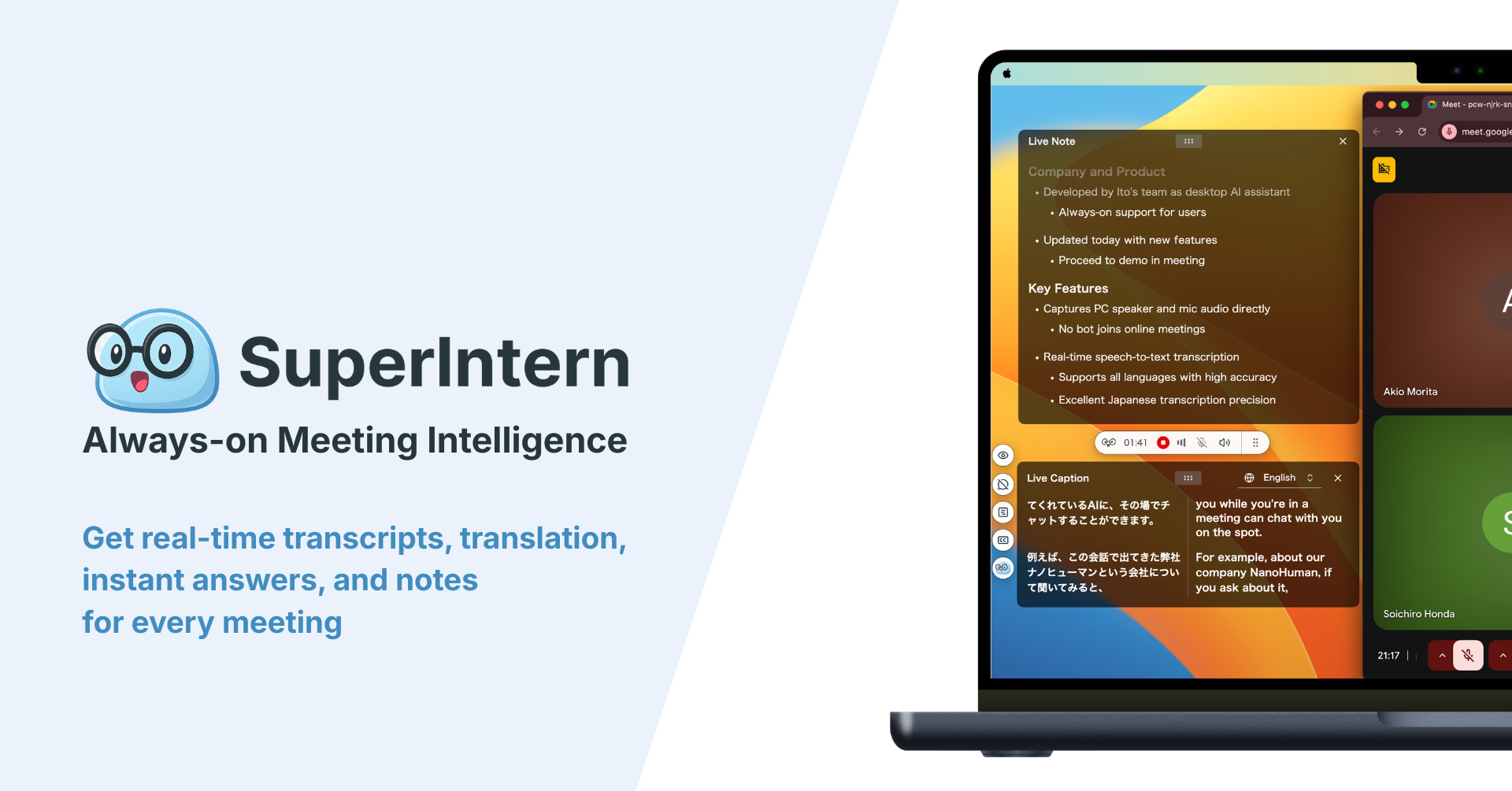
A real-time AI meeting assistant takes care of that part. SuperIntern is a botless desktop app for Mac and Windows that captures the conversation through your computer's microphone and system audio. Because no bot joins the meeting, the other side sees no extra participant, and it works the same way in Zoom, Google Meet, Microsoft Teams, Webex, and in-person meetings.
How to use it in a negotiation:
- Live concession log. Add an instruction to AI Canvas such as "Keep a table of each side's proposals and concessions with exact numbers, plus a list of open items." The note updates itself while you talk.
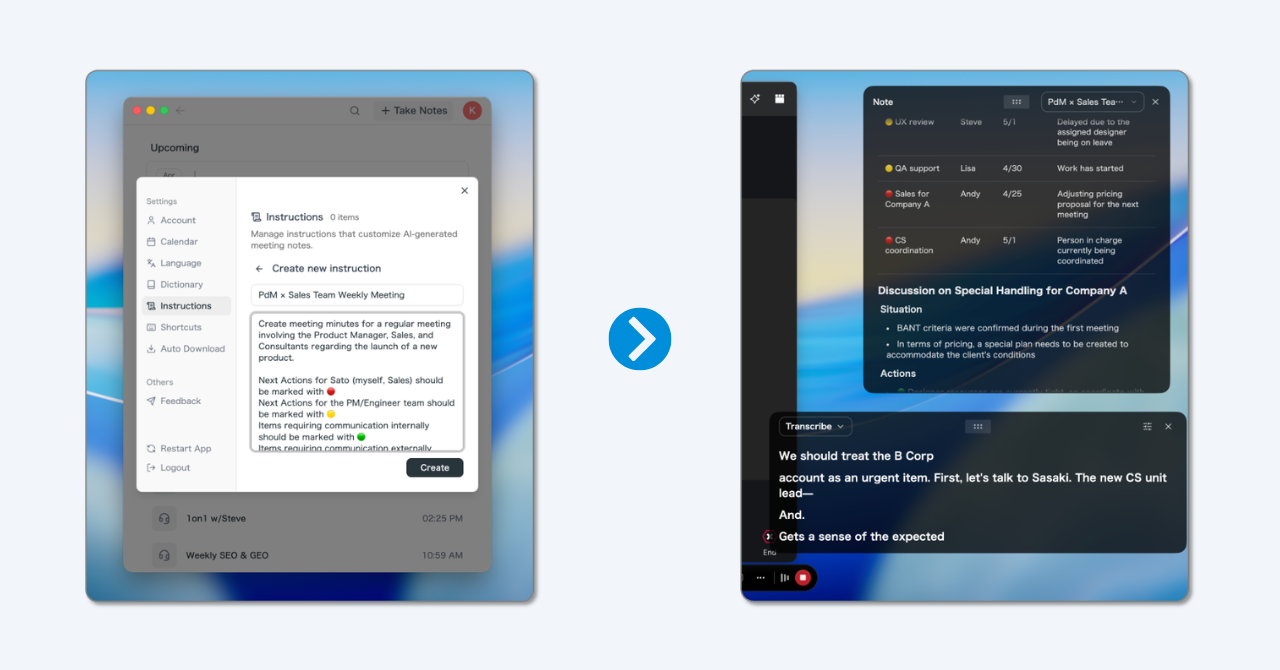
- Ask mid-meeting. In the in-meeting AI chat you can ask, for example, "What conditions did the customer set for accepting two years?" without interrupting the conversation. The chat uses the transcript up to that moment.
- Stay discreet when sharing your screen. Invisible Mode hides the SuperIntern window during screen sharing, so the other side never sees your notes or your walk-away number.
- Negotiate across languages. Real-time translation covers more than 50 languages, so what a supplier says in Spanish or Japanese appears in English while they are still speaking.
- A recap for the follow-up email. After the meeting, ask for a summary of agreements, concessions, and next steps in whatever language you need, and use it as the basis of your confirmation email.
To be clear about scope: SuperIntern is a note-taking and support tool for live meetings, not a contract management system or legal advisor. Always review important agreements before signing, and get participants' consent before recording or transcribing, as data protection rules in many countries require.
As of October 2026, the Free plan costs nothing and the Plus plan is $20 per month with 100 hours included. Live notes are available on the free plan, so you can try it in your next negotiation at no cost.
FAQ
What are the most effective negotiation techniques?
The ones with the most impact are also the simplest: know your BATNA, ask about interests before discussing price, anchor with a well-justified first offer, and never concede without getting something in return. Tactical techniques such as silence or multiple offers work best on top of that foundation.
What are the main types of negotiation?
By dynamics, negotiation is either distributive (splitting a fixed amount) or integrative (creating value before splitting it). By context, people talk about sales, labor or collective, international, salary, and cross-department negotiation.
What are the stages of negotiation?
Preparation, opening, exploring interests, proposal and bargaining, and closing with follow-up. Some authors group them into three phases (before, during, and after), but the underlying sequence is the same.
Should I make the first offer?
If you know the market well and have solid reasons, making the first offer usually helps because it anchors the conversation. If you lack information, it is wiser to ask questions first and let the other side reveal their range.
How do you negotiate over a video call?
Keep your camera on, ask more explicit questions than you would in person, confirm numbers in writing in the chat, and summarize after each section. An AI assistant that transcribes and summarizes the meeting means no one has to rely on memory.
Can I record a negotiation?
Only with the participants' consent. Rules vary by country, but in general you need to inform people and get permission before recording or transcribing. A short sentence at the start of the meeting is usually enough.
Conclusion
Good negotiation is not about tricks. It is about preparation, listening, and discipline with agreements. Four habits make the difference:
- Prepare your BATNA and reservation point before every meeting. They give you calm and room to move.
- Explore interests before arguing positions. That turns a split into a deal with more value.
- Trade, don't give. Tie every concession to something in return, in shrinking steps.
- Put everything in writing. Concessions, numbers, and next steps, on the same day.
Start with the prep template in your next negotiation. And if you'd rather focus on the conversation than on your notes, a botless AI assistant records every proposal and concession as it is said.
Try SuperIntern Free. No bots in the meeting, concessions captured as they happen, and real-time translation for negotiating across languages.